

Dealing with FHA loan mortgage insurance premiums (MIP) can be tough for homeowners. To remove PMI from an FHA loan, you need to know the right steps and requirements. The U.S. housing market has different ways for borrowers to cut down on these extra monthly costs.
Homeowners with FHA loans often face high mortgage insurance premiums. This can make their monthly housing costs much higher. This guide will show you how to remove or lower MIP based on when you got your loan, your down payment, and other important FHA loan rules.
Key Takeaways
- FHA loans require mortgage insurance premiums for most loan terms
- Loan origination date impacts MIP removal eligibility
- Down payment size affects mortgage insurance duration
- Refinancing can be an effective strategy for MIP removal
- Credit score and home equity play critical roles in insurance cancellation
Understanding FHA Mortgage Insurance Premiums (MIP)
FHA mortgage insurance premiums are key to Federal Housing Administration loan rules. They protect lenders if borrowers can’t pay their loans. Knowing about FHA mortgage insurance premiums helps homeowners make smart money choices.
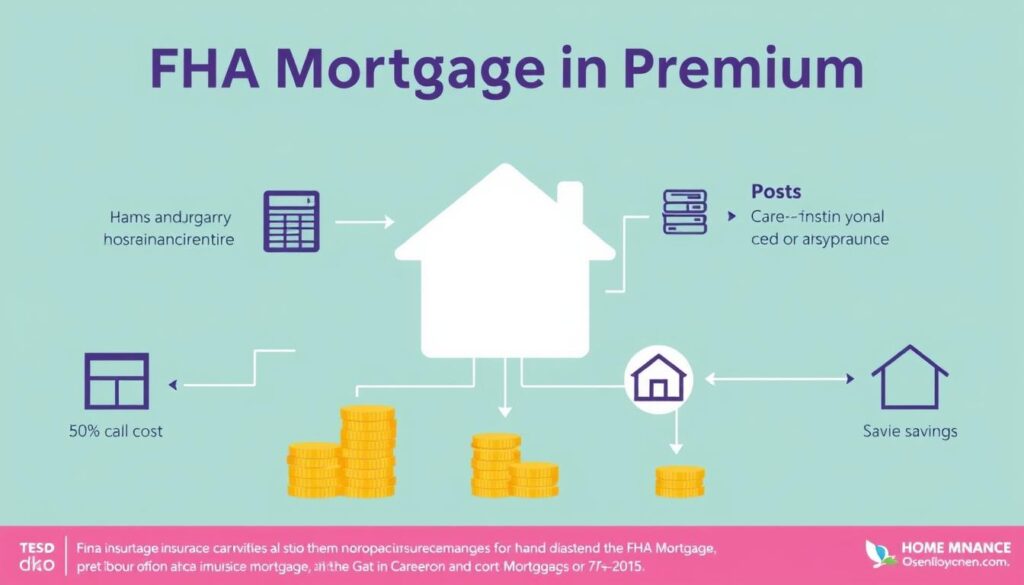
The FHA loan rules cover two main types of mortgage insurance premiums:
- Upfront Mortgage Insurance Premium (UFMIP): A one-time payment made at closing
- Annual Mortgage Insurance Premium (MIP): Payments made every year for the loan’s life
Cost Structure of FHA Mortgage Insurance
The cost of FHA mortgage insurance premiums changes based on several things:
- Loan amount (ranges from 0.45% to 1.05% annually)
- Down payment percentage
- Loan term length
“FHA mortgage insurance is designed to make homeownership more accessible while protecting lenders from possible financial risks.”
Differences Between MIP and Private Mortgage Insurance
FHA mortgage insurance is different from private mortgage insurance (PMI). While PMI stops when you have 20% equity, FHA MIP lasts the whole loan, unless you put down more than 10%.
| Premium Type | Calculation | Duration |
|---|---|---|
| Upfront MIP | 1.75% of loan amount | One-time payment |
| Annual MIP | 0.45% – 1.05% annually | Varies by loan terms |
Homebuyers should think about these premium structures when looking at FHA loans. This helps them understand the long-term costs of mortgage insurance.
Eligibility Requirements for MIP Removal
To remove mortgage insurance on an FHA home loan, you need to meet certain criteria. It’s important to know what makes you eligible for mortgage insurance premium (MIP) removal.

- FHA loans closed before June 3, 2013
- FHA loans closed on or after June 3, 2013
If your loan was closed before June 3, 2013, you must follow these steps:
- Make all monthly mortgage payments on time
- Pay MIP for at least 5 years on 20, 25, or 30-year loans
- Achieve a loan-to-value (LTV) ratio of 78% or less
Knowing these rules is key for homeowners wanting to remove mortgage insurance from their FHA home loan.
For FHA loans closed after June 3, 2013, the rules are different:
| Down Payment | MIP Removal Conditions |
|---|---|
| 10% or more | MIP can be removed after 11 years |
| Less than 10% | MIP remains for entire loan duration |
It’s vital for borrowers to check their loan terms. They should talk to their loan servicer to see if they can remove mortgage insurance.
Loan Origination Date Impact on MIP Cancellation
The date your FHA loan was started is key to when you can stop paying mortgage insurance. It’s important to know how this date affects your options for dropping FHA mortgage insurance.

FHA rules for stopping mortgage insurance change based on when your loan started. You need to check your loan details to see if you can remove mortgage insurance.
Pre-2013 FHA Loan Considerations
For loans started from 2001 to June 2, 2013, you have more ways to cancel MIP:
- MIP can be canceled when the Loan-to-Value (LTV) ratio reaches 78%
- You need at least 22% equity in your home
- You must have made all payments on time
Post-2013 FHA Loan Regulations
Loans started on or after June 3, 2013, have stricter rules for MIP cancellation:
- You need a down payment of at least 10%
- MIP can only be canceled after 11 years
- If you put down less than 10%, MIP stays for the whole loan term
Special Time Period Considerations
Each time period for loan origination has its own rules for MIP cancellation. It’s important to talk to your loan servicer to know your situation.
“Knowing when your loan started is essential for understanding FHA mortgage insurance cancellation options.” – Mortgage Experts
| Loan Origination Period | MIP Cancellation Rules |
|---|---|
| Before 2013 | Cancel at 78% LTV |
| After 2013 (10%+ down) | Cancel after 11 years |
| After 2013 (<10% down) | MIP for entire loan term |
Understanding FHA mortgage insurance cancellation rules is key. Homeowners should look at their loan details to find the best way to move forward.
How to Get Rid of PMI on FHA Loan
To cancel PMI on an FHA loan, you need to know a few key steps. Homeowners can use two main ways to remove mortgage insurance: automatic termination and refinancing.

Wondering how to remove PMI from an FHA loan? It depends on when your loan started. Loans made before June 3, 2013, have different rules than newer ones.
- Pre-2013 FHA Loans:
- 30-year loans can cancel MIP after 5 years when loan balance reaches 78% of original value
- 15-year loans can cancel MIP faster, typically within 2 years
- Post-2013 FHA Loans:
- MIP becomes permanent for most borrowers
- Loans with 10% down payment can cancel MIP after 11 years
Looking to cancel PMI FHA? Refinancing is another option. Switching to a conventional loan can remove mortgage insurance, which is great when you have 20% equity in your home.
Key Refinancing Considerations:
Ensure current loan balance is at or below 80% of property’s current value
| Loan Type | MIP Cancellation Options |
|---|---|
| Pre-2013 30-year Loan | Cancel after 5 years at 78% LTV |
| Pre-2013 15-year Loan | Cancel within 2 years at 78% LTV |
| Post-2013 Loan | MIP remains unless 10% down payment |
Knowing these strategies can help you manage your mortgage insurance costs. This could lower your monthly payments.
Down Payment Requirements and MIP Duration
It’s important to know how FHA down payments and mortgage insurance premiums (MIP) work together. The down payment you make affects how long and how much you’ll pay for mortgage insurance on FHA loans.

10% Down Payment Scenarios
Those who put down 10% or more get better deals on FHA loans. Here’s what you need to know:
- Annual MIP will be automatically canceled after 11 years
- Lower long-term insurance costs compared to smaller down payments
- Potential savings of thousands of dollars over the loan term
Less Than 10% Down Payment Cases
If you put down less than 10%, the rules are stricter:
- Annual MIP must be paid for the entire loan term
- Higher overall insurance costs
- No automatic cancellation option
“The down payment amount directly influences your long-term mortgage insurance expenses.” – FHA Lending Expert
The upfront FHA mortgage insurance premium is 1.75% of the loan amount. For 2025, the annual MIP rate is about 0.55% of the loan amount. This is a drop from the previous 0.85% rate.
Tip: Carefully consider your down payment strategy to minimize long-term mortgage insurance costs.
Think about your financial situation and future plans before choosing a down payment. The right choice can save you a lot of money over time.
Automatic MIP Cancellation Criteria
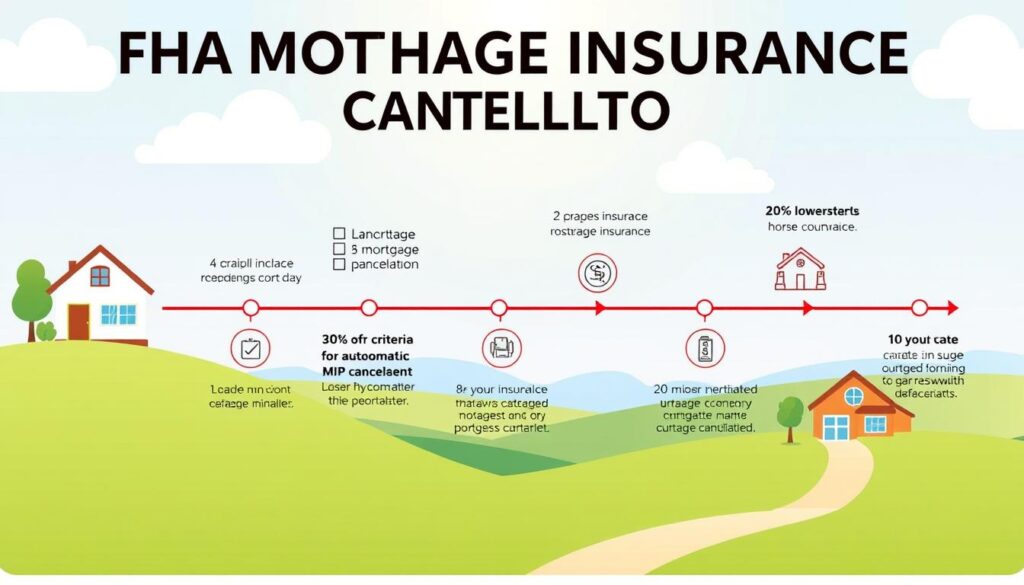
Understanding FHA mortgage insurance cancellation can be complex for homeowners. The automatic MIP cancellation process depends on several key factors. Borrowers must carefully consider these factors.
FHA loan requirements for MIP cancellation vary based on specific criteria. Here are the primary conditions for automatic cancellation:
- Loan origination date before or after June 3, 2013
- Down payment percentage at closing
- Loan-to-value (LTV) ratio progression
- Payment history and current loan status
For loans closed before June 3, 2013, borrowers can potentially remove MIP when their loan reaches a 78% LTV ratio. Loans closed after this date have more restrictive cancellation guidelines.
| Loan Closure Date | Down Payment | MIP Cancellation Criteria |
|---|---|---|
| Before June 3, 2013 | Any percentage | Can cancel at 78% LTV |
| After June 3, 2013 | Less than 10% | MIP required for entire loan term |
| After June 3, 2013 | 10% or more | MIP removable after 11 years |
“Borrowers must maintain a perfect payment history to qualify for automatic MIP cancellation.” – FHA Guidelines
To ensure successful fha mortgage insurance cancellation, homeowners should:
- Track their loan’s LTV ratio
- Maintain consistent on-time payments
- Request a professional loan review
- Consider refinancing if MIP removal seems challenging
Automatic MIP cancellation provides homeowners with a chance to reduce their monthly mortgage expenses. Understanding these specific requirements helps borrowers plan their financial strategies effectively.
Refinancing Options to Remove MIP
Refinancing is a smart way to get rid of mortgage insurance on an FHA home loan. It helps homeowners cut down on insurance costs and might lower their monthly payments.
Switching from an FHA loan to a conventional one has big benefits. It can save homeowners hundreds of dollars each month. This move is a smart financial choice.
Conventional Loan Refinancing Strategies
When looking to remove mortgage insurance, homeowners should think about conventional loan refinancing. Important things to consider are:
- Current home equity levels
- Credit score requirements
- Potential interest rate changes
- Closing costs and long-term savings
Benefits of FHA to Conventional Conversion
Switching to a conventional loan from an FHA loan has many benefits:
- Eliminate mandatory mortgage insurance premiums
- Potentially lower monthly payments
- Opportunity to secure a more competitive interest rate
- Increased financial flexibility
“Refinancing can be a powerful tool for removing mortgage insurance and improving your overall financial situation.”
Before refinancing, homeowners should look at their situation closely. Things like current interest rates, home value, and long-term goals are key. They help decide the best refinancing plan.
| Refinancing Consideration | Impact |
|---|---|
| Closing Costs | Typically $3,000-$6,000 |
| Potential Monthly Savings | $200-$500 |
| Minimum Equity Required | 20% for PMI removal |
Note: Refinancing may not be ideal for everyone. Consult with a financial advisor to determine the best approach for removing mortgage insurance on your FHA home loan.
Credit Score Requirements for MIP Removal

Understanding credit scores is key when looking at FHA loan rules for mortgage insurance premium (MIP) removal. Your credit score is very important for refinancing and possibly getting rid of MIP.
Lenders have certain credit score levels for FHA loans. Usually, you need a credit score of 580 to get an FHA loan. But, to remove MIP through refinancing, lenders want a score of 620 or higher.
“Your credit score is the key that can unlock better mortgage terms and possible MIP removal,” financial experts often say.
- Minimum FHA credit score requirement: 580
- Preferred refinancing credit score: 620
- Higher credit scores can lead to better loan terms
If your credit score is lower, you can work on improving it:
- Pay bills on time every month
- Reduce your debt
- Avoid opening new credit accounts
- Check your credit reports for mistakes
Knowing these credit score rules is vital for homeowners wanting to remove MIP. Keeping a good credit score helps you qualify for refinancing and might get rid of mortgage insurance premiums.
Calculating Loan-to-Value Ratio for MIP Removal
Understanding the loan-to-value (LTV) ratio is key when dealing with FHA loans and mortgage insurance. The LTV ratio shows how much you owe on your loan compared to your home’s value. It’s important for figuring out if you can drop mortgage insurance.
How to Determine Your LTV
Figuring out your LTV ratio is easy. Here’s how to do it:
- Find out how much you owe on your loan
- Get a precise appraisal of your home’s value
- Divide your loan balance by your home’s value
- Multiply that number by 100 to get a percentage
“Knowing your LTV ratio is the first step toward potentially removing FHA mortgage insurance premium.”
For instance, if you owe $270,000 on a $300,000 home, your LTV is 90%. Most lenders want an LTV of 78% or less to remove mortgage insurance.
Impact of Home Value Changes
Changes in your home’s value can change your LTV ratio. Things like home improvements, market shifts, and neighborhood changes can boost your home’s value. This could help you meet the MIP removal criteria sooner.

| LTV Percentage | MIP Removal Possible |
|---|---|
| 90% or higher | MIP usually stays |
| 80% or lower | Chance for MIP removal |
| 78% or lower | Good chance for MIP cancellation |
Pro tip: Keeping up with home maintenance and making smart improvements can raise your home’s value. This can also improve your LTV ratio.
Working with Your Loan Servicer
Removing mortgage insurance on an FHA loan needs careful talk with your loan servicer. Knowing the fha loan rules is key to removing mortgage insurance successfully.
Before talking to your loan servicer, get all important papers ready. This makes the process smoother and shows you’re ready to move forward.
- Collect recent mortgage statements
- Prepare proof of home value
- Verify your current loan-to-value ratio
- Organize payment history documentation
When you call your loan servicer, be ready to share details about your FHA loan. Ask about the exact steps to remove mortgage insurance and how long it might take.
“Effective communication with your loan servicer can significantly simplify the mortgage insurance removal process.” – Mortgage Industry Expert
Loans started after June 3, 2013, with a 10% down payment can drop mortgage insurance after 11 years. Loans started before might have other rules.
Be patient and keep trying. Some loan servicers might need more talks or papers to approve your request.
- Request a detailed written explanation of removal requirements
- Keep all communication records
- Regularly check on your request
- Be ready to give more info
The Federal Housing Administration has clear rules for loan servicers. Knowing these fha loan rules helps you move through the mortgage insurance removal process better.
Alternative Methods to Lower Monthly Payments
Homeowners with FHA home loans can use several strategies to lower their mortgage costs. These methods help manage monthly expenses better. They go beyond just removing mortgage insurance premiums.
The FHA Streamline Refinance is a great way to cut down on mortgage costs. It lets homeowners:
- Lower interest rates without a new property appraisal
- Reduce monthly payments
- Minimize documentation requirements
- Potentially save hundreds of dollars annually
Consider refinancing if:
- Current interest rates are at least 0.50% lower than their existing rate
- They have made six consecutive on-time mortgage payments
- They can show a clear financial gain from refinancing
“Refinancing isn’t just about lowering rates, it’s about strategic financial management.” – Housing Finance Expert
Debt consolidation is another effective method. It involves combining high-interest debts into the FHA home loan. This can lower monthly payments and make finances simpler.
Even if removing all mortgage insurance isn’t possible right away, these strategies offer real ways to cut down on mortgage costs. They help improve personal financial health.
Common Mistakes to Avoid When Removing MIP
Removing mortgage insurance premiums (MIP) from FHA loans can be tricky. Knowing common mistakes helps avoid delays and saves money.
Many borrowers face issues when trying to remove MIP from FHA loans. Being aware of these mistakes can save time and reduce stress.
Timing Complications in MIP Removal
Timing is key for successful MIP cancellation. Homeowners often make mistakes that can stop their efforts:
- Requesting removal too early in the loan term
- Missing optimal refinancing windows
- Not tracking loan-to-value ratio precisely
Documentation Challenges
Accurate documentation is vital for FHA mortgage insurance cancellation. Borrowers need to prepare well to avoid problems.
| Common Documentation Errors | Potential Consequences |
|---|---|
| Incomplete loan payment history | Automatic rejection of MIP removal request |
| Outdated property appraisal | Delayed processing of cancellation |
| Incorrect equity calculations | Rejection of MIP removal application |
Success strategies include:
- Maintaining meticulous financial records
- Understanding exact equity requirements
- Timing your MIP removal request strategically
“Preparation and precision are your best allies in navigating the FHA mortgage insurance cancellation process.” – Mortgage Expert
Careful attention to detail can significantly improve your chances of successfully removing MIP from your FHA loan.
Benefits of MIP Removal
Removing mortgage insurance premiums (MIP) from an FHA loan can bring big financial wins. It’s a smart move to cut down on FHA mortgage costs and boost your financial health.
The main perks of MIP removal are:
- Big monthly savings
- More money for other things
- Long-term financial gains
- More financial freedom
Getting rid of MIP can really help your wallet. Typically, MIP costs range from 0.15% to 0.75% of the loan principal. This means saving hundreds of dollars every year. You can use this money for:
- Investing in retirement
- Improving your home
- Building an emergency fund
- Pay off other debts
“Removing MIP is not just about saving money, but about creating financial opportunities for homeowners.” – Mortgage Financial Expert
When thinking about removing PMI from an FHA loan, check your loan details. Loans made before June 3, 2013, have different rules than newer ones.
For many, cutting FHA mortgage costs by removing MIP is a smart choice. It helps homeowners manage their housing expenses better.
Required Documentation for MIP Cancellation
To cancel FHA mortgage insurance, you need to prepare certain documents. Homeowners must collect important papers to make the MIP removal process smoother.
- Current mortgage statement
- Property appraisal report
- Proof of on-time payments for past 12 months
- Loan amortization schedule
- Recent property tax assessment
When preparing these documents, pay close attention to details. You need to show you’ve made payments on time and have a good loan-to-value ratio.
| Document Type | Purpose | Importance |
|---|---|---|
| Mortgage Statement | Verify Current Loan Balance | High |
| Property Appraisal | Determine Home Value | Critical |
| Payment History | Confirm Timely Payments | Essential |
Pro tip: Organize these documents before approaching your loan servicer to expedite the FHA mortgage insurance cancellation process.
Accuracy and completeness are key when submitting documentation for MIP removal.
Requirements change based on when you got your loan and how much you paid down. FHA loans with a 10% down payment might qualify for MIP removal sooner, if you got your loan before June 3, 2013.
You’ll need to show:
- Principal residence status
- Current loan-to-value ratio
- Consistent payment history
- Home equity requirements
Timeline for MIP Removal Process
Removing FHA mortgage insurance premium (MIP) takes time and planning. Homeowners need to know the timelines and rules for their loan’s MIP status.
Processing Periods for MIP Removal
The time it takes to remove MIP changes based on when the loan was made and the down payment. Homeowners should expect different times for processing:
- Loans before June 3, 2013 with 10% down payment: MIP removal after 5 years
- Loans after June 3, 2013 with 10% down payment: MIP removal possible after 11 years
- Loans with less than 10% down payment: MIP remains for the entire loan term
Expected Waiting Times
The FHA loan rules set waiting times for MIP removal. Typical times are:
- Document verification: 2-4 weeks
- Loan servicer review: 3-6 weeks
- Final approval: 4-8 weeks
“Patience is key when removing FHA mortgage insurance. Understanding the process helps set realistic expectations.”
Things that can affect the timeline include how fast the loan servicer works, how complete the documents are, and the loan’s details. Homeowners should get all documents ready and keep up with payments to make the process smoother.
Pro tip: Contact your loan servicer early to understand the specific requirements for your unique loan scenario.
Conclusion
Getting rid of PMI on an FHA home loan needs a smart plan and knowledge. Homeowners have several ways to lower or remove mortgage insurance premiums. This depends on their loan details and financial goals.
Refinancing is a strong choice for those wanting to get rid of MIP. Homeowners with FHA loans can look into switching to conventional loans when they have enough equity. This step involves checking the market, home value, and financial readiness.
Every homeowner’s path is different. Things like when the loan was started, the down payment, and the current home value are key. By managing finances well and keeping an eye on home value, homeowners can move faster towards no mortgage insurance.
Removing MIP successfully takes time, planning, and knowing FHA loan rules. Homeowners should talk to mortgage experts. This way, they can get a plan that fits their financial situation and future homeownership plans.