
Moving a mobile home is a big task with many details and costs. The price to move a mobile home can change a lot. It can be from $1,000 to $20,000, depending on several things. It’s important for homeowners to know these factors when they plan to move their home.
Almost 22 million families in the U.S. live in mobile homes. This means moving is a common issue for them. Homeowners face costs for moving, setting up, and following rules when they plan to move their home.
Things that affect the cost of moving a mobile home include how far it needs to go, its size, weight, and what services are needed. Professional movers look at all these things to figure out the exact cost of moving and setting up the home.
Key Takeaways
- Mobile home moving costs range from $1,000 to $20,000
- Pricing depends on home size, distance, and service level
- Transport-only moves are typically less expensive
- Professional movers provide complete relocation services
- Permits and setup fees greatly affect the total cost
Understanding Mobile Home Moving Costs and Services
Mobile home relocation is complex and has variable costs. Homeowners need to compare moving options to control expenses.
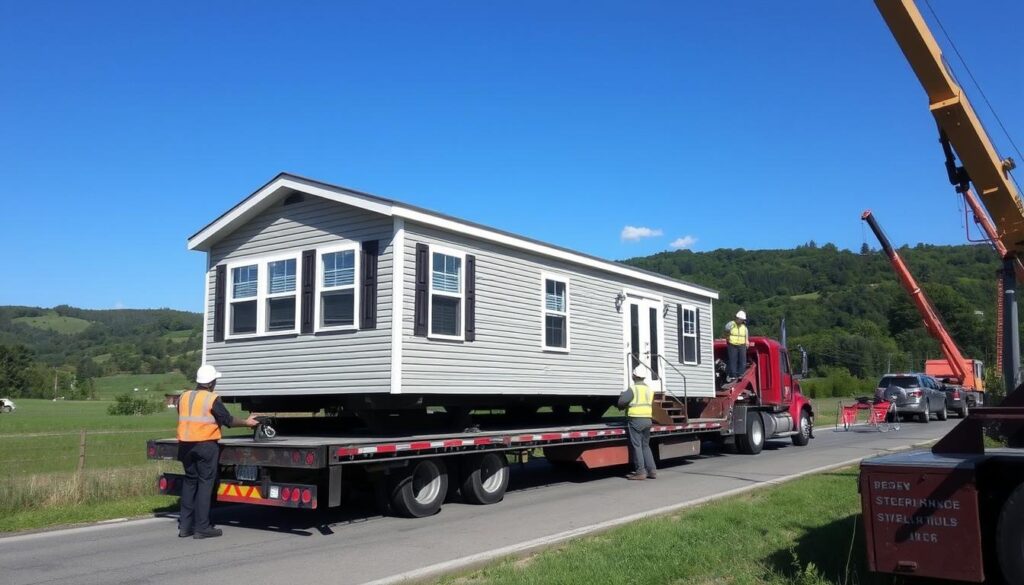
Choosing the right moving service is key to your budget. There are two main options for moving a mobile home:
Transportation Service Types
- Transport-Only Moves
- Full-Service Moves
Comparing Moving Service Options
| Service Type | Cost Range | Home Size |
|---|---|---|
| Transport-Only | $700 – $3,500 | Single to Triple-Wide |
| Full-Service | $3,000 – $14,000 | Single to Triple-Wide |
Transport-only moves are basic and cost less. They require homeowners to do more work.
Full-service moves offer complete help, from disconnection to setup at the new site.
Professional movers suggest looking at your needs and budget before choosing a service.
Expenses vary based on distance, home size, and setup complexity. Get quotes from different companies and know what each service includes.
How Much Does It Cost to Move a Mobile Home
Figuring out the cost to move a mobile home can be tricky. The price tag varies a lot based on several important factors. On average, homeowners spend between $3,000 and $14,000 for a full move.
The main things that affect the cost include:
- Size of the mobile home
- Distance of transportation
- Transport method (full-service vs. transport-only)
- Local regulations and permit requirements
Looking at the cost by size shows big differences:
- Single-wide homes: $3,000 to $5,000 for full-service moves within 60 miles
- Double-wide homes: $4,000 to $10,000 for full-service moves within 60 miles
- Triple-wide homes: $10,000 to $14,000 for full-service moves within 60 miles
Pro tip: Transport-only moves can save a lot of money, with prices from $700 to $3,500. This depends on the home’s size and how complex the move is.
Don’t forget to add extra costs like pilot car services (about $1.50 to $1.65 per mile), permit fees, and setup costs at the new place. These should be included in your budget for moving your mobile home.
Size-Based Cost Breakdown for Mobile Home Relocation
Moving a mobile home is complex and affects costs. The size of your home is key in figuring out moving costs. Knowing these differences helps homeowners plan their move better.

Mobile homes vary in size, each with its own moving challenges and costs. The main types are single-wide, double-wide, and triple-wide. Each size has its own financial impact on moving.
Single-Wide Mobile Home Moving Costs
Single-wide homes are 600 to 1,300 square feet. They are usually cheaper to move:
- Short-distance moves (up to 60 miles): $4,000 to $8,000
- Long-distance moves (over 100 miles): Up to $15,000
- Average weight: 35-40 pounds per square foot
Double-Wide Mobile Home Moving Costs
Double-wide homes are 2,000 to 2,500 square feet. They need more complex moving plans:
- Short-distance moves: $8,000 to $15,000
- Long-distance moves: Up to $20,000
- Average weight: 45-50 pounds per square foot
Triple-Wide Mobile Home Moving Costs
Triple-wide homes are the biggest and most challenging to move. They are 4,500+ square feet:
- Short-distance moves: $12,000 to $25,000
- Long-distance moves: Up to $30,000+
- Needs special moving equipment
“The size of your mobile home directly impacts transportation complexity and associated costs.”
Expect extra costs like permit fees, road escort needs, and repair costs. These can add to your moving expenses.
Distance and Transportation Fee Structure
Knowing the cost of moving a mobile home is key to planning your budget. The distance of your move greatly affects the cost. Companies charge based on the miles traveled.
When getting a quote for moving a mobile home, there are several costs to consider:
- Towing vehicle rates: $4-$5.50 per mile
- Pilot car fees: $1.50-$1.65 per mile
- Additional mileage charges: $5-$15 per mile
Long-distance moves cost more. Several things can affect the price of your move:
- Total travel distance
- Number of escort vehicles needed
- How difficult the terrain is
- State laws about moving
“Distance turns moving into a big financial choice.”
It’s wise to get quotes from different companies. This way, you can see the exact cost for your move. Prices can change a lot based on where you’re moving and the company’s rules.
| Move Distance | Estimated Transportation Cost | Additional Fees |
|---|---|---|
| 0-50 miles | $1,000 – $3,000 | Minimal permit costs |
| 50-200 miles | $3,000 – $8,000 | Increased escort vehicle fees |
| 200+ miles | $8,000 – $20,000 | Complex permit requirements |
Remember to add extra money for unexpected costs when moving your mobile home. This will help make your move smoother and less stressful financially.
Essential Permits and Legal Requirements
Moving a mobile home is a complex task. It involves many legal steps and permits. These can make the cost of moving go up.

When you move a mobile home, you need to pay attention to many details. You must get the right permits and documents. This ensures your move goes smoothly and follows the law.
State Transportation Permits
Every state has its own rules for moving mobile homes. You’ll need to get special permits for moving your home. These permits show that your move is legal.
- Obtain state-specific transportation permits
- Verify route clearance for oversized loads
- Secure necessary highway transportation documentation
- Pay required state permit fees
Local Setup Permits
Local areas also have their own rules for placing mobile homes. These rules can change a lot from one place to another.
- Contact local zoning departments
- Submit site plan and home specifications
- Schedule mandatory site inspections
- Obtain final placement approval
Insurance Requirements
It’s very important to have good insurance when moving your mobile home. This insurance helps cover any damage that might happen during the move.
| Insurance Type | Coverage Range | Average Cost |
|---|---|---|
| Basic Transit Insurance | $50,000-$100,000 | $500-$1,200 |
| Comprehensive Coverage | $100,000-$250,000 | $1,200-$2,500 |
“Proper documentation and insurance are your best protection during mobile home relocation.” – Professional Moving Association
Knowing about these legal steps helps you plan better and avoid extra costs. Doing your homework is key to a successful move.
Setup and Installation Costs at New Location
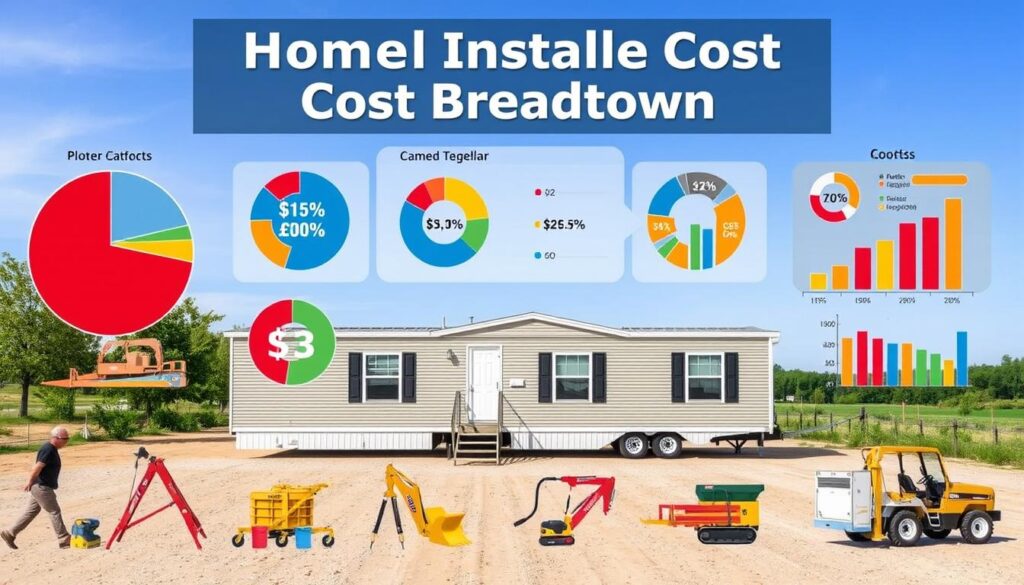
When planning to move your mobile home, setting a budget for setup and installation is key. Professional services can cost between $3,000 and $5,000. This is a big part of the moving costs.
The installation process has several important steps. These steps affect the total cost of moving:
- Foundation preparation
- Utility connection services
- Leveling and stabilization
- Skirting installation
- Electrical and plumbing hookups
Mobile home moving prices can change based on the site’s needs. Several factors can affect the cost:
- Ground terrain complexity
- Local building code regulations
- Existing site infrastructure
- Distance between transportation route and final placement
“Proper setup is key for your mobile home’s long-term stability and safety,” says Mark Rodriguez, an industry expert.
Expect extra costs for specialized equipment and professional labor. These are needed for a proper installation and to meet local building standards.
It’s wise to budget an extra $2,500 to $5,000 for setup services. This helps cover any unexpected issues during installation.
Weight and Size Considerations for Moving Costs
Knowing the weight and size of your mobile home is key to figuring out moving costs. The size and weight of your home affect the cost to move it. Experts look at these details to figure out the moving complexity and cost.

Mobile homes usually weigh between 35 to 50 pounds per square foot. For example, a 900-square-foot home could weigh up to 45,000 pounds. This heavy weight plays a big role in the moving plan and cost.
Weight Calculations per Square Foot
Movers calculate the weight to estimate moving costs. Important factors include:
- Total square footage of the mobile home
- Construction materials used
- Age and condition of the structure
- Additional fixtures and attachments
Size Restrictions and Special Requirements
Different sizes of mobile homes need special moving plans. Oversize or overweight homes often need special permits and equipment. This can make moving costs higher.
| Mobile Home Type | Typical Weight Range | Transportation Complexity |
|---|---|---|
| Single-Wide | 20-30 tons | Low |
| Double-Wide | 35-50 tons | Medium |
| Triple-Wide | 50-70 tons | High |
“The weight of your mobile home is not just a number—it’s a critical factor in determining transportation logistics and costs.” – Professional Mobile Home Mover
Always talk to experienced movers for accurate quotes. They will consider your home’s weight and size to give you a detailed estimate.
Utility Disconnection and Reconnection Expenses
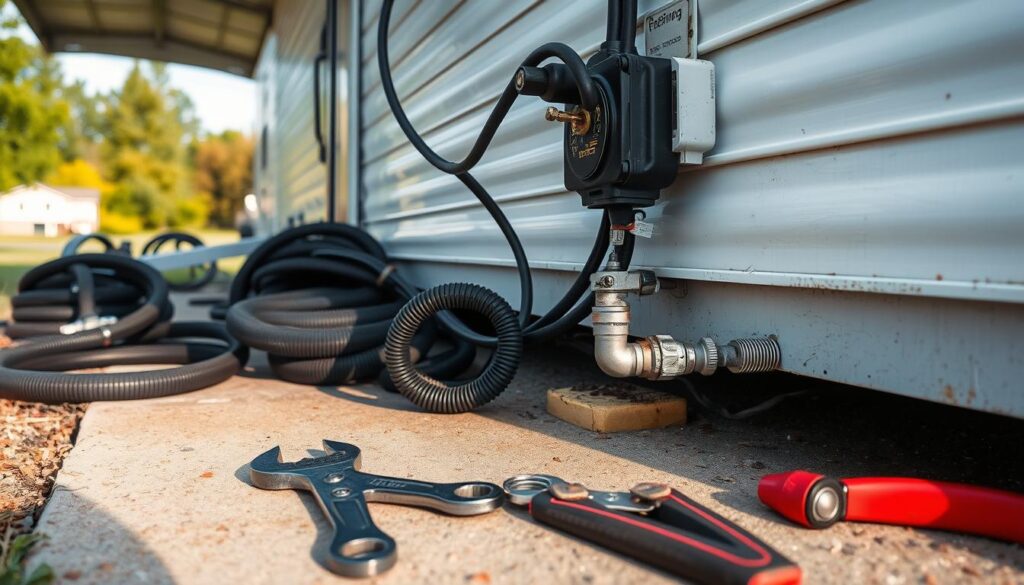
When planning to move your mobile home, remember the costs of disconnecting and reconnecting utilities. These costs can add up quickly. It’s important to include them in your budget.
Disconnecting and reconnecting utilities involves several steps:
- Professional electrical system disconnection
- Plumbing line separation
- Gas line shut-off and reconnection
- Water line management
Utility service transitions typically range from $300 to $1,000. This depends on your mobile home’s setup and local rates. Experts ensure everything is done safely and correctly at your new place.
“Proper utility management is key to avoiding surprise costs during mobile home moves.”
Here are some specific costs you might face:
- Electrical system disconnect: $150-$350
- Plumbing line separation: $200-$450
- Gas line shut-off: $100-$250
- Water line management: $75-$200
It’s wise to contact your local utility providers early. They can help you understand any fees and what’s needed for reconnection at your new home.
Planning ahead can help keep your mobile home move costs down. Always get detailed quotes from licensed professionals. This way, you can avoid any unexpected expenses during your move.
Additional Moving Materials and Equipment Costs
When you’re moving a mobile home, you need special tools to do it right. These tools help make sure your move is safe and goes well. You’ll need to think about the costs of these materials and tools when you get a moving estimate.
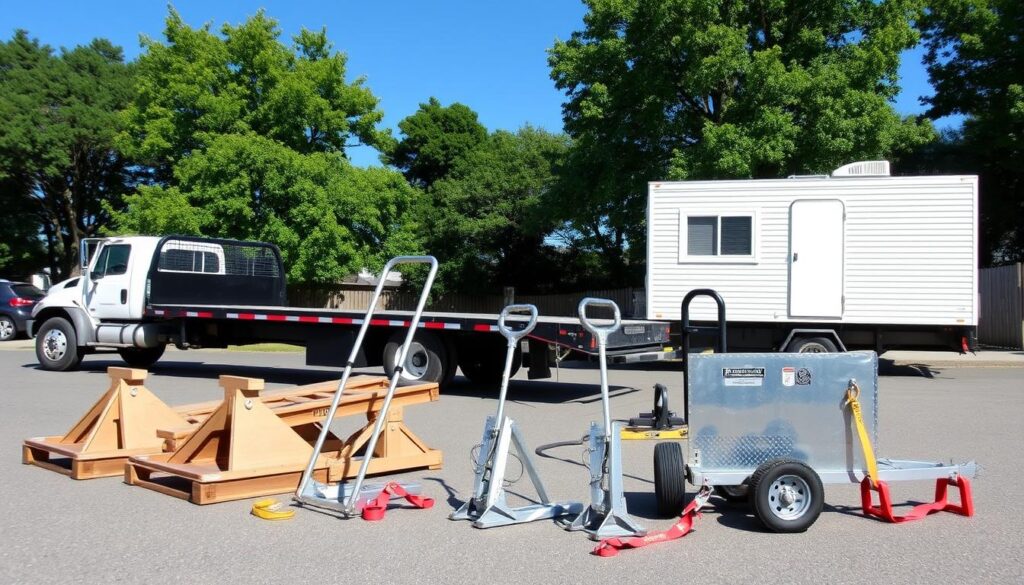
Experts use special gear to move mobile homes safely. Here are some key items they use:
- Heavy-duty chains for securing the mobile home
- Specialized lumber for support and stabilization
- Fifth-wheel hitches designed for mobile home transport
- Industrial-grade tow hitches
- Protective heavy-duty tarps
The cost of moving a mobile home can change based on the equipment needed. Movers usually charge extra for the special tools and gear they use.
| Equipment Type | Estimated Cost Range | Purpose |
|---|---|---|
| Securing Chains | $150 – $300 | Stabilize mobile home during transport |
| Specialized Hitches | $200 – $500 | Ensure safe connection to towing vehicle |
| Protective Tarps | $100 – $250 | Protect mobile home from road debris |
| Support Lumber | $50 – $150 | Provide structural support during move |
*Professional equipment can significantly reduce risks during mobile home transportation.*
Mobile home owners should plan for these extra costs. Getting ready with the right tools helps make your move smooth and safe.
Professional Mobile Home Moving Companies vs DIY
Choosing between professional movers and doing it yourself is a big decision. The cost to move a mobile home can change a lot based on your choice.
Professional movers offer full solutions for moving your mobile home. To figure out the cost, you need to look at both professional and DIY options.
Benefits of Professional Movers
- They know how to handle the complex logistics of moving a mobile home.
- They have the right equipment to move your home safely.
- They provide insurance for your home while it’s being moved.
- They know all the rules and permits needed for the move.
- They can help avoid damage to your home.
Risks of DIY Moving
Trying to move a mobile home by yourself can be very risky. It can also cost a lot of money.
- You might have to rent expensive equipment.
- There’s a chance your home could get damaged during the move.
- Dealing with permits and rules can be hard.
- You won’t have the expertise of professional movers.
- There could be safety issues during the move.
“Professional mobile home movers can save you time, money, and headaches in the long run.”
Even though DIY might seem cheaper at first, professional movers usually offer more value. The cost to move with professionals is usually between $7,000 and $15,000. This depends on how far you’re moving and the size of your home.
In most cases, the complexity of moving a mobile home means you should choose professional services. They are safer and more efficient for most homeowners.
Age and Condition Impact on Moving Costs
The age and condition of a mobile home greatly affect moving costs. Older homes often need special care, which can raise the price a lot.
Mobile homes built before 1976 face unique challenges. The HUD safety standards warn against moving these homes due to structural risks. These older units usually need extra preparation and special moving gear.
- Homes older than 15-20 years may need structural reinforcement
- Potential hidden damage can increase mobile home hauling charges
- Vintage mobile homes might require custom transportation solutions
Factors that affect moving prices based on age include:
- Structural integrity assessment
- Frame and foundation condition
- Material degradation over time
- Potential retrofitting requirements
“The older the mobile home, the more complex and expensive the move becomes.”
Newer homes have lower moving prices because they follow modern standards. Experts suggest a detailed check before moving an older home to guess extra costs.
Weight differences between old and new homes also affect costs:
- Older mobile homes: 35-40 lbs per square foot
- Newer manufactured homes: 45-50 lbs per square foot
When moving an older mobile home, expect to spend more. Costs can be $2,000 to $5,000 more than usual.
Wind Zone Regulations and Moving Requirements
The Department of Housing and Urban Development (HUD) has divided the United States into three wind zones. These zones affect the cost of moving a mobile home. They also set safety standards for homes during transport.
HUD’s wind zone system helps keep mobile homes safe from wind damage. Each zone has its own features:
- Zone I: Covers southeastern states like Texas, Louisiana, and Florida
- Zone II: Includes states such as California, Arizona, and Missouri
- Zone III: Encompasses all remaining states
Wind speed resistance varies by zone, affecting moving costs:
- Zone I: Maximum wind resistance of 70 miles per hour
- Zone II: Wind speed resistance up to 100 miles per hour
- Zone III: Wind speed resistance of 110 miles per hour
When moving a mobile home, knowing the wind zone rules is key. Moving to a different zone might need changes to the home, which can raise costs.
“Understanding wind zone regulations is critical for safe and compliant mobile home relocation.” – HUD Housing Standards Division
Professional movers check if your home meets wind zone rules before moving. They check the home’s structure, ensure it’s anchored right, and confirm it meets safety standards at the new location.
| Wind Zone | States Covered | Wind Speed Resistance | Typical Moving Cost Impact |
|---|---|---|---|
| Zone I | Southeast Region | Up to 70 mph | Lower modification costs |
| Zone II | Southwest/Midwest | Up to 100 mph | Moderate modification expenses |
| Zone III | Remaining States | Up to 110 mph | Potential higher modification fees |
Cost-Saving Tips for Mobile Home Relocation
Moving a mobile home can be pricey. But, with smart planning, you can cut down on costs. Homeowners can use several tips to save money and make the move easier.
Strategic Timing for Your Move
Choosing the right time to move can lower costs. Here are some tips:
- Move in late fall or winter when it’s less busy.
- Stay away from summer, the busiest time.
- Book a weekday move for cheaper rates.
Comprehensive Preparation Strategies
Good preparation can also save you money. Focus on detailed planning and doing things yourself.
| Preparation Area | Potential Cost Savings |
|---|---|
| DIY Packing | $500-$1,500 |
| Personal Disconnection of Utilities | $200-$600 |
| Self-Preparation for Transport | $1,000-$2,500 |
“Smart preparation can save up to 30% on total moving expenses” – Professional Moving Association
More ways to save include:
- Get quotes from different movers.
- Negotiate prices when it’s less busy.
- Check for hidden fees before agreeing.
- Think about moving part of it yourself.
Proactive planning makes moving a mobile home easier on your wallet. By using these tips, you can save money and have a smooth move.
Insurance Coverage During Transport
When moving your mobile home, getting the right insurance is key. If damage happens during transport, costs can add up fast. Knowing your insurance options helps protect your investment.
Liability coverage is important for managing moving costs. Most moving companies offer different insurance levels:
- Basic Liability Coverage
- Comprehensive Transit Protection
- Full-Value Replacement Insurance
It’s wise to choose insurance that includes:
- Cargo Insurance: Protects against damage during transport
- Collision Coverage: Addresses accidents
- Property Damage Protection: Covers structural impacts
“Investing in proper insurance is cheaper than replacing an entire mobile home.” – Professional Moving Expert
Insurance costs depend on your mobile home’s value, size, and how far it’s moving. Insurance usually costs between 1% to 5% of the home’s value. For a $50,000 home, expect to pay between $500 and $2,500.
Before you move, check your homeowner’s insurance. Talk to your provider about extra transit coverage. Some policies might already cover part of the move.
Conclusion
Mobile home moving is complex and needs careful planning and budgeting. The cost to move a mobile home can range from $1,000 to $20,000. This depends on the home’s size, how far it needs to go, and what services are required.
Many things affect the price of moving a mobile home. These include the home’s type, how far it needs to travel, and extra services. Knowing these costs is key for homeowners. Moving a single-wide home might cost $3,000 to $5,000. But, moving a triple-wide home could cost over $14,000.
Relocating a mobile home requires careful thought. Hiring professionals might cost more but can offer complete solutions. Homeowners should also plan for permits, disconnecting utilities, and setup fees at the new place.
To relocate a mobile home successfully, do your homework. Get quotes from different companies and understand the moving process. This way, you can find a balance between cost and safety in your move.