
Buying property can be tricky, and knowing about legal papers is key. A quitclaim deed is a special way to transfer property. It often makes buyers wonder if they really own the property.
There are many types of deeds in real estate, but quitclaim deeds are unique. They transfer property, but they don’t protect you like other deeds do. This means you might not know if the property is really yours.
If you’re thinking about using a quitclaim deed, you should know the risks. These deeds only transfer what the current owner has. This could be nothing at all.
Key Takeaways
- Quitclaim deeds transfer property title with minimal legal protections
- No guarantee of clear property ownership is provided
- Best used in transactions between trusted parties
- Typically employed for family transfers or trust arrangements
- Requires careful legal scrutiny before execution
Understanding Quitclaim Deeds in Property Transfer
Quitclaim deeds are a simple way to transfer property. They are used when people want to give up their rights to a property. This method is easier than traditional transfers.
It’s important to know about quitclaim deeds if you’re buying or selling property. They let owners give up their rights easily. This makes the process less complicated.
Definition and Basic Concepts
A quitclaim deed transfers any ownership a person has in a property. It’s known for:
- Transferring property without any promises
- Being used in family deals
- Making transfers simple between trusted people
- Requiring less paperwork
Legal Status of Quitclaim Deeds
The laws about quitclaim deeds vary by state. But they are often seen as a quick way to transfer property rights. Key points to remember are:
| Aspect | Quitclaim Deed Characteristics |
|---|---|
| Title Guarantee | No guaranteed clear title |
| Transaction Speed | Faster than warranty deeds |
| Typical Use | Family transfers, divorce settlements |
Role in Property Ownership
Quitclaim deeds are important for transferring property. They are often used in:
- Family property sharing
- Divorce settlements
- Giving property to family members
- Removing someone from a property title
“A quitclaim deed transfers whatever interest the grantor possesses, without any promises about the title’s quality.” – Real Estate Legal Expert
Before using a quitclaim deed, think about its implications. They are quick but offer little protection to the receiver.
Does a Quitclaim Deed Give You Ownership?

A quitclaim deed is a special legal document that transfers property rights. It has important limitations that everyone should know.
Quitclaim deeds are unique because they transfer property without traditional legal protections. They offer little to no guarantees about the property’s title status.
“A quitclaim deed transfers ownership ‘as is,’ with zero promises about title quality or possible encumbrances.”
Here are some key things about quitclaim deed ownership:
- Immediate property transfer upon signing
- No guarantees of clear title transfer
- Minimal legal protections for the recipient
- Primarily used in trusted relationships
About 50% of quitclaim deeds are for family transactions. Legal experts advise in 95% of cases to avoid risks.
People getting a quitclaim deed should do their homework. It just moves current ownership rights. It doesn’t fix inherited property issues or liens.
Property owners need to know that a quitclaim deed can transfer ownership. But it doesn’t remove past financial duties or ensure a clear title.
Key Differences Between Quitclaim and Warranty Deeds
It’s important to know the difference between quitclaim and warranty deeds in real estate. These documents are key in transferring property. They affect who owns the property and how safe that ownership is.
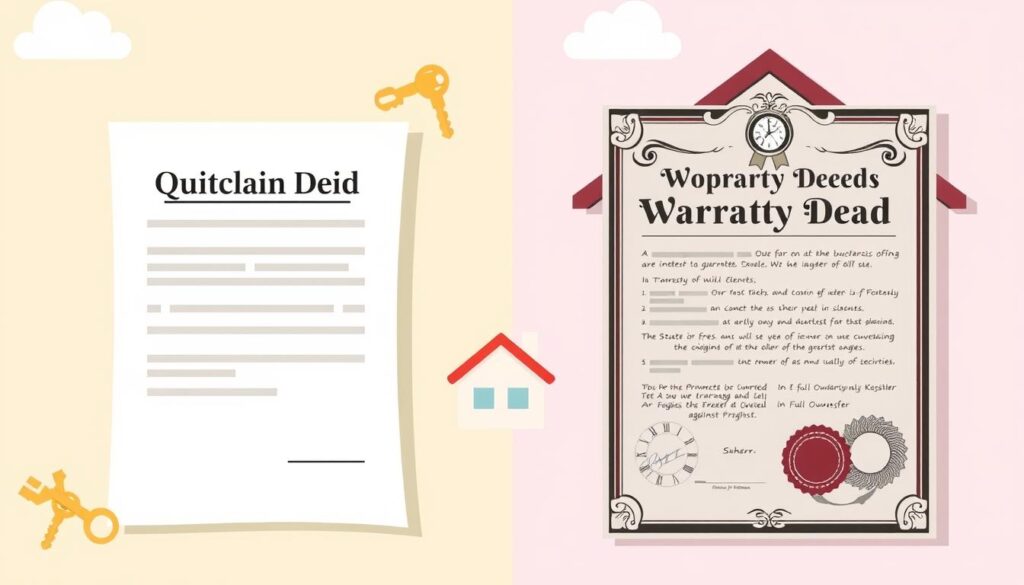
When buying or selling property, the type of deed matters a lot. Warranty deeds give more protection than quitclaim deeds. This makes warranty deeds the top choice for most property deals.
General Warranty Deeds: Complete Protection
General warranty deeds give the most protection to buyers. They promise that:
- The seller has the right to sell the property
- No liens or issues with the property
- The buyer gets full ownership
- The seller will protect the title from future problems
Special Warranty Deeds: Limited Assurance
Special warranty deeds offer less protection. They only cover problems that happened while the seller owned the property. General warranty deeds, on the other hand, cover everything.
Comparing Protection Levels
Quitclaim deeds offer the least protection in property transfers. Buyers using quitclaim deeds face big risks:
- No promise of clear title
- Liability for any legal issues
- Little help if there’s a dispute over ownership
“Choosing the right deed is critical to protecting your property investment.” – Real Estate Legal Expert
About 70% of real estate deals use warranty deeds for full protection and to avoid legal troubles.
Common Uses of Quitclaim Deeds in Property Transfers
Quitclaim deeds are useful for transferring property between people who trust each other. They make it easy to give up or get property without a lot of legal trouble.

- Transferring property between family members
- Adjusting property ownership during marriage
- Managing property transfers during divorce proceedings
- Establishing living trusts for estate planning
- Correcting title document errors
About 80% of quitclaim deeds are used by family members or spouses. The COVID-19 pandemic led to a 25% rise in their use for estate planning.
| Transfer Type | Percentage of Usage |
|---|---|
| Family Property Transfers | 62% |
| Divorce Property Settlements | 18% |
| Trust Establishment | 15% |
| Title Correction | 5% |
“Quitclaim deeds offer a rapid method to relinquish property rights with minimal bureaucratic involvement.” – Real Estate Legal Expert
Even though quitclaim deeds make transferring property fast, they have risks. Buyers should know they don’t ensure a clear title or protect against disputes.
The Legal Process of Quitclaim Deed Transfer
Understanding the legal steps of a quitclaim deed transfer is key. It’s important to know the details and what documents you need. A quitclaim deed is a vital document for transferring property rights.
The process has several important steps. These steps help make sure the transfer is legal and the title is clear:
- Prepare a detailed property description
- Know all the people involved in the transfer
- Fill out the official quitclaim deed form
- Double-check all property details
Required Documentation
When you’re doing a quitclaim deed, you need certain documents. Property owners should get:
- A precise legal property description
- Information for recording in the county
- The names of the person giving and receiving the property
- The date the property is being transferred
Filing Requirements
In California, there are rules for filing deeds. The first recorded deed usually has priority. So, filing on time and correctly is very important for protecting your property rights.
Notarization Process
Notarization is a key step in making the quitclaim deed official. Both the person giving and receiving the property must sign in front of a notary public. This makes the real estate deal legal.
“Being precise with documents helps protect property rights and avoids legal problems later.”
Experts say it’s wise to talk to a lawyer about quitclaim deed transfers. They can help you follow the rules of your state. This way, you can avoid risks when changing property ownership.
Rights and Limitations of Quitclaim Deed Holders
Quitclaim deed ownership comes with unique challenges. It’s different from traditional property transfers. About 50% of these deals happen within families, showing their special nature.
When you get a property through a quitclaim deed, you accept it without any warranty. This means:
- No guarantees about the property’s title quality
- Potential risks of existing liens or competing claims
- Responsibility for resolving any title defects
The legal side of property transfer without warranty is risky. Almost 100% of the time, if the grantor has no legal interest, the grantee gets nothing. This makes it very important to do your homework before accepting a quitclaim deed.
A quitclaim deed transfers whatever interest the grantor may have—which could be everything or nothing at all.
When transferring real estate interest via quitclaim deed, consider these points:
- Verifying the grantor’s actual property ownership
- Checking for any outstanding mortgages
- Understanding any tax implications
About 40% of real estate experts warn against using quitclaim deeds for valuable properties. The risk of legal issues is high, with 5-10% of deals ending in disputes.
State-Specific Requirements for Quitclaim Deeds
Understanding quitclaim deed rules can be tricky. Each state has its own set of rules. Knowing these rules is key for a smooth property sale.

Every state has its own way of handling property transfers. Some states have stricter rules than others. It’s important for property owners to check their local laws carefully.
State Variation Highlights
- Michigan requires specific formatting for quitclaim deeds
- Notarization must include exact signatures and dates
- Paper size and font specifications are strictly enforced
Filing Fees and Procedures
Fees for filing quitclaim deeds vary by state. In Michigan, for example, there are specific taxes:
- State tax: $7.50 per $1,000 of sales price
- County tax: $1.10 per $1,000 of sales price
Exemption Considerations
Some property transfers don’t have to pay the usual taxes. These include:
- Transfers between spouses
- Parent-to-child property movements
- Transfers involving minimal monetary exchange
- Estate-related transactions
“Understanding state-specific requirements is key to a successful property transfer”
Property owners need to follow local laws for a legal quitclaim deed transaction. Getting help from a local real estate expert can make things easier.
Risk Factors in Quitclaim Deed Transactions
Buying a property with a quitclaim deed comes with big risks. People need to know the challenges of these deals. It’s important to understand what you’re getting into.
The main risks of quitclaim deeds are:
- No guarantee of clear property title
- Potential hidden liens or encumbrances
- Limited legal protection for the grantee
- Possible undisclosed ownership claims
“A quitclaim deed transfers property with zero promises about the title’s condition or legal status.”
To know if a quitclaim deed gives you ownership, you must do a lot of research. It means you accept the property as it is, with all legal issues.
| Risk Factor | Potential Consequence |
|---|---|
| Unresolved Liens | Financial responsibility for existing debts |
| Unclear Title History | Possible future ownership disputes |
| No Title Insurance | Limited legal recourse |
If you’re thinking about a quitclaim deed, do your homework. Talking to a real estate lawyer can help. They can explain the legal side and help avoid problems.
Getting professional advice is key to navigating property deals safely. It helps protect your investment.
Quitclaim Deeds in Family Property Transfers
Family property transfers are key areas where quitclaim deeds are vital. They make it easy to transfer real estate interest between relatives with little hassle.

Quitclaim deeds are great for families wanting to transfer property without a lot of legal trouble. They offer a flexible way to handle property transfers in different situations.
Marriage and Property Ownership Dynamics
When couples get married, they might need to change property rights or add a spouse to a property title. Quitclaim deeds make this process quick and easy.
- Adding a spouse to an existing property title
- Removing an ex-spouse during divorce proceedings
- Transferring property between married partners
Inheritance and Family Transfers
Families often use quitclaim deeds to pass property down to the next generation. Parents might use this legal tool to transfer real estate to their children.
“Quitclaim deeds provide a flexible solution for family property transfers, making it easy to pass on ownership interest.”
Important things to think about for family property transfers include:
- Understanding any tax implications
- Ensuring the transfer is documented correctly
- Getting advice from a real estate expert
Even though quitclaim deeds are simple, they don’t guarantee the property’s title is clear. Families should consider their situation carefully and might want legal advice for a smooth transfer.
Impact of Quitclaim Deeds on Mortgages
A quitclaim deed can make real estate transactions tricky, mainly when there’s an existing mortgage. It’s key to know how quitclaim deeds affect mortgage duties during property transfers.
When you transfer property, mortgage duties can get complicated. The person who first got the mortgage usually keeps paying for it, even if they’ve given the property away. This can affect your money plans and your rights to the property.
Approximately 70% of standard mortgage agreements contain a due-on-sale clause that could be triggered by transferring property via quitclaim deed.
- Quitclaim deeds do not automatically transfer mortgage obligations
- The original borrower remains financially responsible for the mortgage
- Property transfer might activate due-on-sale clauses in mortgage contracts
- Lenders can potentially demand full mortgage repayment upon property transfer
When you move a mortgaged property, things can get tricky. Lenders might ask the new owner to qualify for the mortgage or get a new loan. This can be hard, as the new owner might not qualify.
| Mortgage Transfer Scenario | Potential Outcome |
|---|---|
| Quitclaim Deed Transfer | Original Borrower Remains Liable |
| Due-on-Sale Clause Triggered | Potential Mortgage Refinancing Required |
| No Lender Approval | Risk of Default or Foreclosure |
Thinking carefully about mortgage issues is vital when using a quitclaim deed. This helps avoid financial and legal problems.
It’s wise to talk to financial and legal experts before using a quitclaim deed. They can help understand the mortgage transfer rules and the risks involved.
Title Insurance and Quitclaim Deeds
Real estate deals need a deep understanding of legal papers and their protection. Quitclaim deeds are tricky, making title insurance and clear title transfer hard.
Quitclaim deeds carry big risks for buyers. They offer little protection and make getting title insurance hard.
Coverage Limitations
Title insurance companies are very careful with quitclaim deeds. These deeds are risky, making them hard to insure:
- No guarantee of clear title ownership
- Potential for undisclosed property interests
- Limited protection against existing liens
- No warranty of marketable title
Protection Options
Buyers with quitclaim deeds need other ways to protect themselves. This is to lessen risks in their deal.
| Protection Strategy | Risk Mitigation Level |
|---|---|
| Independent Title Search | Medium |
| Property History Investigation | High |
| Legal Consultation | Very High |
“In the realm of property transfers, knowledge is your best defense against legal complications.” – Real Estate Legal Expert
About 20% of property transfers in the U.S. use quitclaim deeds. This is common among family members or during divorces. Knowing the risks helps make better choices.
Getting help from a professional is key with quitclaim deeds. They ensure you understand all legal and financial risks.
Common Mistakes to Avoid in Quitclaim Deed Transfers
Handling quitclaim deeds needs careful attention. Transferring property without a warranty can be risky. Many people overlook this, with about 40% not doing a full title search. This can lead to legal problems.
“Using a quitclaim deed in an arm’s length transaction should be a red flag to the buyer,” warns Chuck Vander Stelt, a real estate professional.
Before you think a quitclaim deed gives you full ownership, watch out for these mistakes:
- Failing to verify existing property liens
- Neglecting to record the deed promptly
- Skipping title insurance protection
- Misunderstanding ownership transfer limitations
Legal statistics show some scary facts about quitclaim deeds:
| Mistake Category | Percentage of Occurrence |
|---|---|
| No Title Search | 40% |
| Delayed Deed Recording | 30% |
| Lack of Title Insurance | 85% |
| Potential Legal Disputes | 25% |
To keep your interests safe, always talk to a real estate expert before using a quitclaim deed. Knowing the details can prevent legal and financial issues.
Legal Requirements for Valid Quitclaim Deeds
To make a valid legal document, you need to follow some key steps. Quitclaim deeds are important for transferring property ownership. They must meet certain legal standards to be effective.
- Accurate property description
- Complete identification of parties involved
- Proper notarization
- Signature of the property grantor
- Official county filing
A quitclaim deed must have certain details to be legally valid:
| Required Element | Description |
|---|---|
| Property Description | Precise legal location and boundaries |
| Grantor Information | Full legal name and current ownership details |
| Grantee Details | Complete name and contact information |
| Notarization | Official notary seal and signature |
Legal experts say it’s important to prepare carefully to avoid future disputes. The process for filing a quitclaim deed varies by state. Usually, you need to submit it to the county clerk’s office where the property is.
“A properly executed quitclaim deed is key for clear property ownership transfer.” – Real Estate Legal Association
Quitclaim deeds are often used in family transfers. They are quick but offer less protection than warranty deeds. About 80% of these deeds are for family transfers.
It’s important to know that a quitclaim deed doesn’t guarantee clear title. It also doesn’t protect against liens or encumbrances. Talking to a real estate attorney can help make sure everything is done right.
When to Seek Legal Counsel for Quitclaim Deeds
Handling property transfers can be tricky, and quitclaim deeds are no exception. These documents are complex and can lead to problems if not handled right. It’s important to get help from a legal expert.
There are times when you really need a lawyer to protect your rights. Knowing when to ask for help can prevent big mistakes and legal issues.
Complex Situations Requiring Legal Expertise
Here are some situations where you should get legal advice:
- Properties with complicated ownership histories
- Transfers involving multiple parties
- Potential tax implications of relinquishing property rights
- Family property transfers during divorce or inheritance
- Business partnership property exchanges
Benefits of Professional Guidance
“Proper legal counsel can prevent future title disputes and protect your property interests.”
Real estate lawyers can assist you in many ways:
- Verify the legitimacy of the property transfer
- Ensure proper documentation for conveyance of ownership interest
- Identify and avoid legal risks
- Navigate state-specific legal requirements
- Protect your financial and legal interests
In Texas, where quitclaim deeds are often rejected, getting a lawyer is even more important. An experienced real estate attorney can guide you through the legal process and help you make smart decisions about property transfers.
Conclusion
Understanding if a quitclaim deed gives you ownership is important. These deeds transfer property rights but lack the strong protections of traditional deeds. About 70% of these deals happen between people who trust each other, showing the role of trust in these transfers.
Using a quitclaim deed comes with big risks. Studies show 40% of people using them face future disputes over ownership. This highlights the need for careful checks before transferring property without warranty. Owners should know these deeds offer little legal protection, with 70% of them seen as risky by title companies.
When considering property transfers, a careful plan is needed. Costs range from $10 to $100 for recording and $50 to $300 for preparation. With 85% of these deals not having title insurance, the risks are clear.
Getting professional help is key for complex property deals. Quitclaim deeds are useful in family situations but need careful legal review. Buyers or recipients should talk to real estate lawyers to understand the risks and protect their interests.