
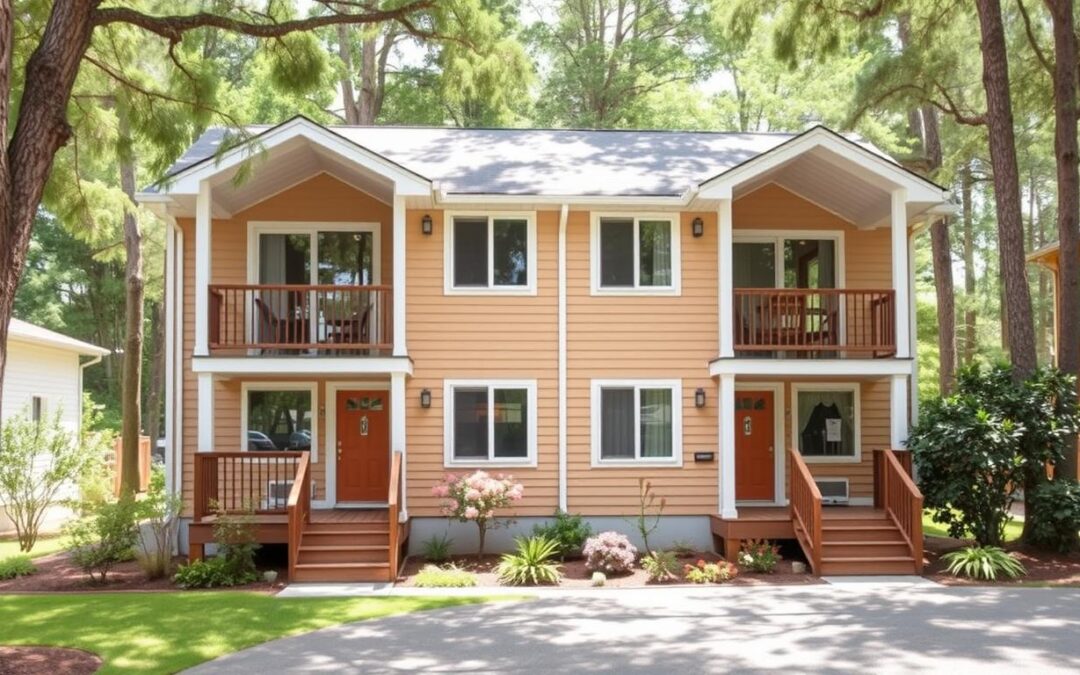
A duplex is a special home with two living areas in one building. It’s known for its unique design. This design lets two families live together but keep their privacy.
Duplexes are more than just a home. They are a smart way to live and invest. They offer a mix between a single-family home and an apartment complex. This makes them popular with homeowners and investors.
Duplexes are great for those who want to live together but also have their own space. Each unit has its own entrance, kitchen, and living areas. This setup gives residents their independence while they share a building.
Key Takeaways
- Duplexes contain two separate living units in one building
- Units can be side-by-side or stacked vertically
- Offers a chance for rental income and investment
- Provides more privacy than traditional multi-unit housing
- Suitable for both homeowners and real estate investors
Understanding Duplex Properties: A Complete Overview
Duplex properties are a special housing option that falls between single-family homes and apartments. They offer great benefits for homeowners and investors looking for flexible living spaces.
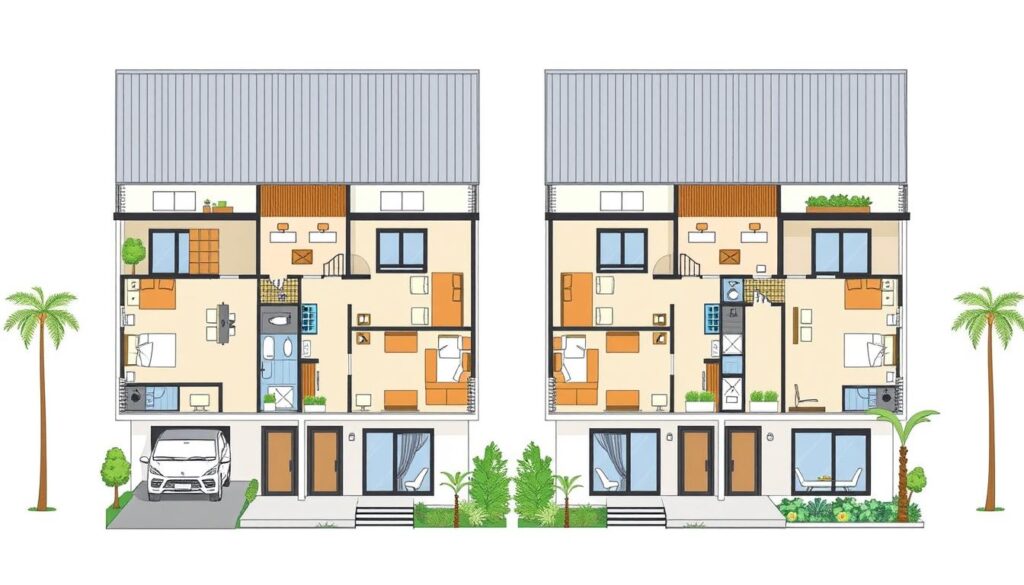
A duplex house has two separate homes in one building, often sharing a wall. These apartments give you your own space but use less land.
Key Features of Duplex Buildings
- Two distinct living units under one roof
- Separate entrances for each unit
- Potential for owner-occupancy and rental income
- Shared structural elements
Common Structural Layouts
Duplex properties come in different layouts. They are mainly divided into two main types:
- Side-by-side units
- Vertically stacked units
Basic Property Characteristics
| Characteristic | Typical Specification |
|---|---|
| Total Units | 2 separate residential units |
| Lot Occupancy | Single parcel of land |
| Average Square Footage | 1,200-2,500 sq ft per unit |
| Ownership | Single owner or individual unit ownership |
In 2021, the multifamily housing market grew by a huge 26.5% in building permits. This shows duplex properties are becoming more popular.
Duplex living offers a unique blend of privacy, possible income, and flexible living arrangements.
What Is a Duplex: Essential Definition and Characteristics
A duplex is a special type of home with two living units in one building. It has a unique design, with two separate homes that might share a wall or be stacked on top of each other. This makes duplexes a great choice for those who want something between a single-family home and an apartment.
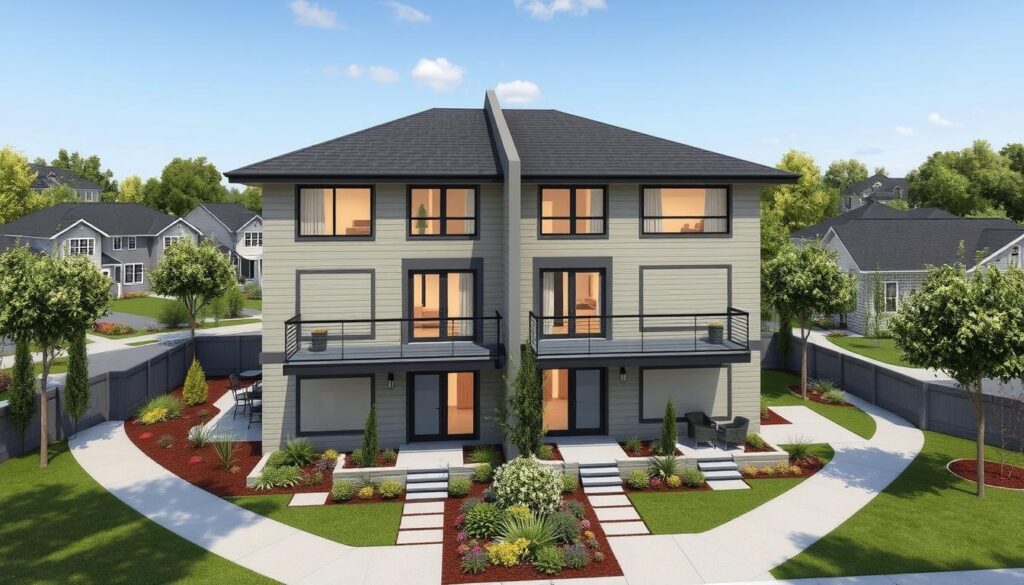
- Separate entrances for each living unit
- Independent living spaces with individual layouts
- Potential for separate outdoor areas
- Shared structural elements like walls or foundations
Duplexes are special because of their design. Recent data shows interesting facts about these homes:
| Characteristic | Statistic |
|---|---|
| Ownership Growth | 5% year-on-year increase |
| Affordability Compared to Single-Family Homes | 10-30% lower costs |
| Rental Income Potentia | 60-80% mortgage coverage |
“Duplexes represent a smart housing solution that combines affordability with flexibility for homeowners and investors alike.”
What makes duplexes unique is their special ownership and design options. They can be side-by-side or stacked, fitting different lifestyles. This makes them appealing to many, like young professionals and families with multiple generations.
Types of Duplex Homes and Their Unique Features
Duplex houses offer versatile living arrangements. They come in various configurations to suit different lifestyles and property needs. Knowing the different types of duplex floor plans helps homeowners and investors make better choices.
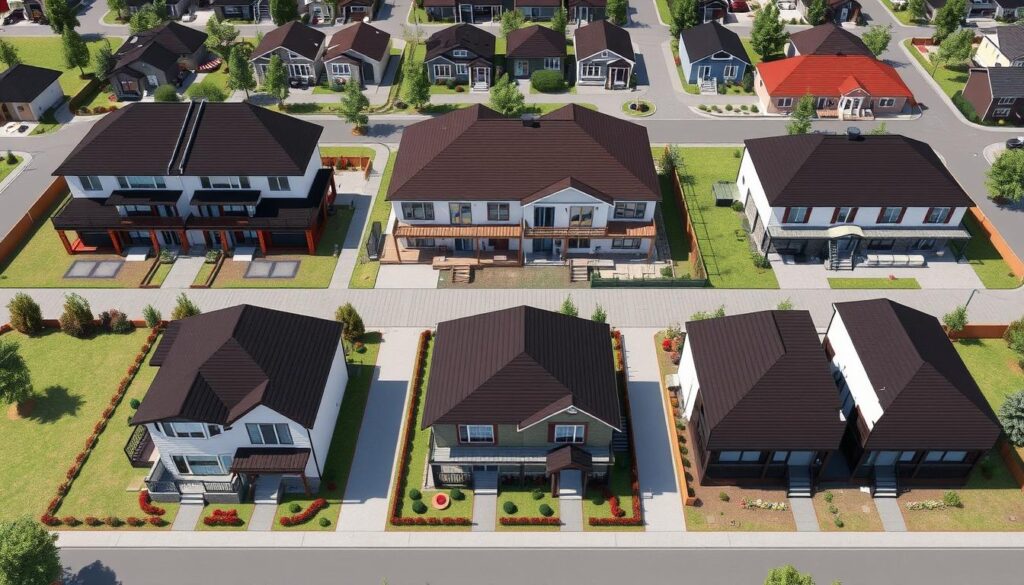
Duplex homes have several distinctive styles. Each style has its own characteristics and benefits:
Ground Level Duplexes
Ground level duplex houses have direct access to outdoor spaces. They are perfect for families and individuals who love easy entry and exit. These duplex floor plans usually have:
- Single-level living with multiple entry points
- Seamless connection to gardens or yards
- Enhanced accessibility for residents
Standard Side-by-Side Units
Side-by-side duplex designs offer a townhouse-like environment. They have shared walls between two separate living units. Typical features include:
- Identical floor plans for each unit
- Separate entrances and living spaces
- Potential for rental income generation
Stacked Duplex Arrangements
Stacked duplex homes maximize urban living space by arranging two units vertically. These designs are efficient and offer:
- Compact footprint in dense urban areas
- Distinct upper and lower living spaces
- Potential for multi-generational living
“Duplex homes provide flexible living solutions that adapt to diverse residential needs and preferences.” – Real Estate Design Experts
Each duplex house type has its own advantages. Homeowners can choose a configuration that fits their lifestyle, budget, and space needs.
The Architecture and Design of Modern Duplexes
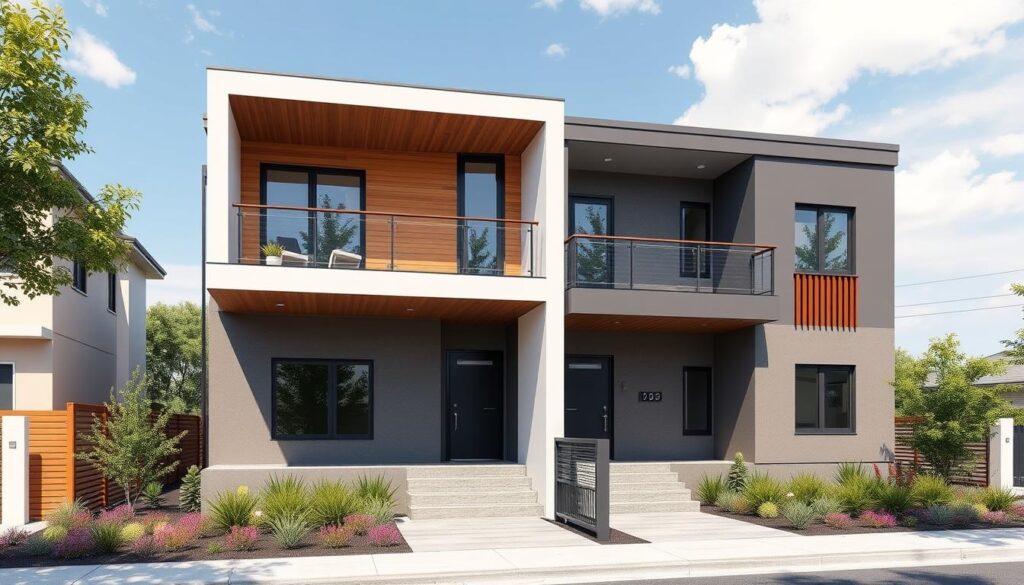
Modern duplexes are a smart way to live in cities and suburbs. They mix new design ideas with useful features. Architects have made duplex floor plans better, making them both efficient and cozy.
What makes today’s duplexes special includes:
- Open-concept living areas that feel big
- Soundproofing between units
- Smart home tech
- Solar panels for green living
Duplex floor plans have changed a lot. Now, they come in many styles, like:
- Ground-level homes with private gardens
- Stacked designs with different living areas
- Side-by-side homes with their own entrances
“The future of housing lies in flexible, efficient design that adapts to changing lifestyle needs.” – Urban Design Quarterly
Sustainability is key in building modern duplexes. Architects use green tech like rainwater systems and energy-saving windows. These features help the planet and save money for homeowners.
The look of duplex homes has also changed. Designers aim to make them look good and fit in with the area. They also make sure these homes are useful and special.
Ownership Structure and Property Rights in Duplexes
Duplex investment offers unique property ownership opportunities. These differ from other residential real estate options. It’s important for investors and homeowners to understand the ownership structure of duplexes.
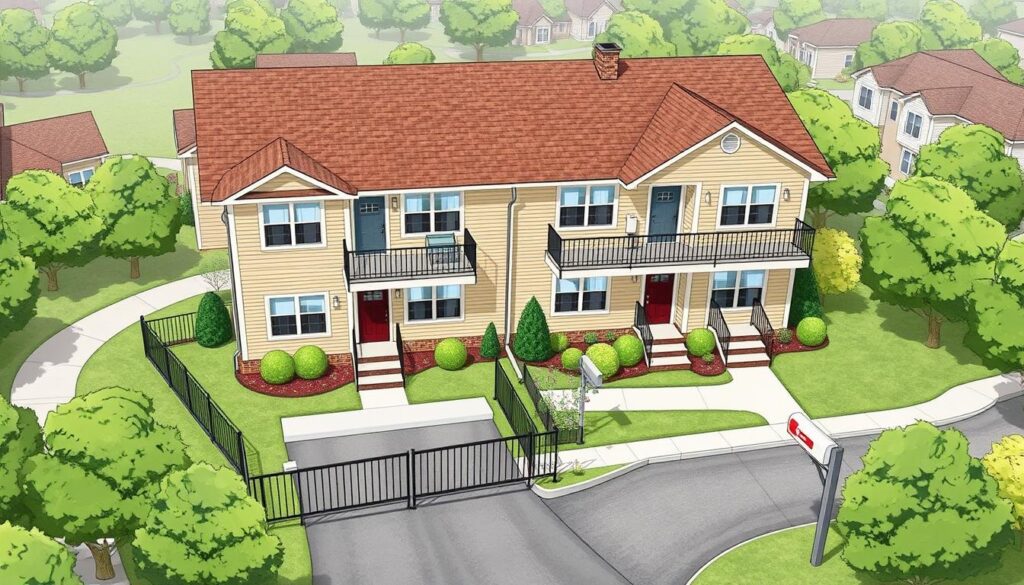
Nearly 20% of families live in multifamily homes, with duplexes being a popular choice. There are two main ownership structures in the duplex market:
- Classic Duplex: Single owner controlling both units
- Twin Homes: Separate owners for each unit
Land Ownership Dynamics
Duplex costs and investment are linked to land ownership rights. Unlike condominiums, duplex owners own both the structure and the land. This gives them more control and customization options.
Common Areas Management
Shared spaces need careful management. Owners must set rules for:
- Maintenance responsibilities
- Landscaping upkeep
- Shared utility management
Legal Considerations
Navigating property rights demands careful attention to local zoning laws and rental restrictions.
Investors should look into legal aspects like insurance, tax deductions, and maintenance duties. Management companies might charge 5-10% of monthly rent for services.
Knowing these ownership details helps investors make smart real estate choices.
Comparing Duplexes to Other Housing Types
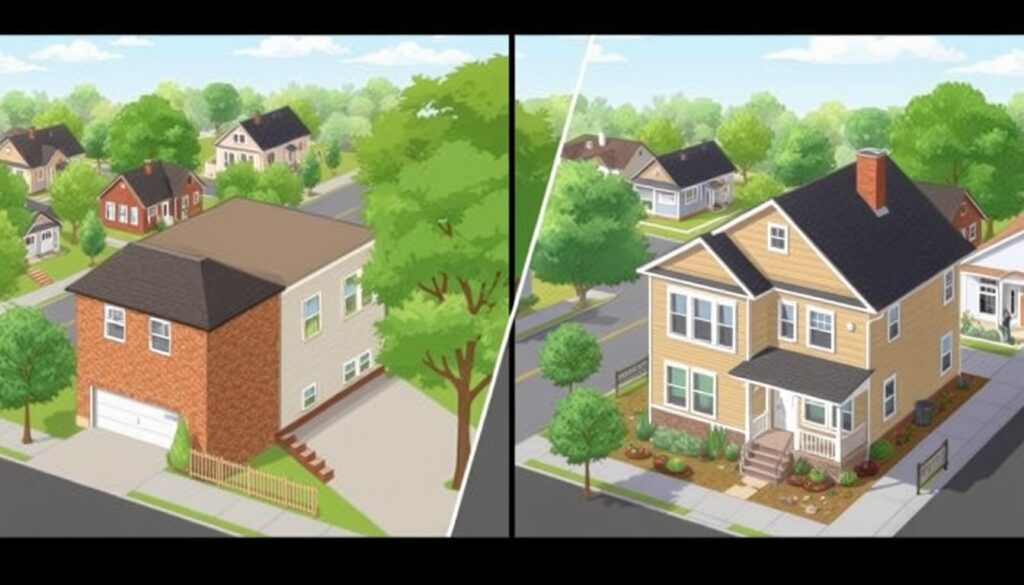
When looking at housing options, knowing the differences between duplexes and single-family homes is key. Each type has its own features that suit different lifestyles and investment goals.
Structural differences are key in telling these housing types apart. Duplexes usually have:
- One shared wall between two units
- Potential for three exterior walls with windows
- More flexible outdoor space options
- Individual unit privacy
Duplexes stand out when compared to townhouses. Townhouses share more walls and have less outdoor space. But duplexes offer:
- Enhanced privacy
- Greater window and door placement flexibility
- More control over maintenance
“Duplexes represent a unique middle ground between single-family homes and multi-unit properties, providing investors and homeowners with remarkable flexibility.” – Real Estate Insights Magazine
Duplexes have a unique investment advantage. Owners can earn rental income by living in one unit and renting the other. This is less common with single-family homes.
Choosing between a duplex and a single-family home depends on your financial goals, lifestyle, and future housing plans.
Investment Opportunity in Duplex Properties
Duplex properties offer a special chance for smart real estate investors. They can make more money and grow their wealth over time. These two-unit homes are great for earning rental income.
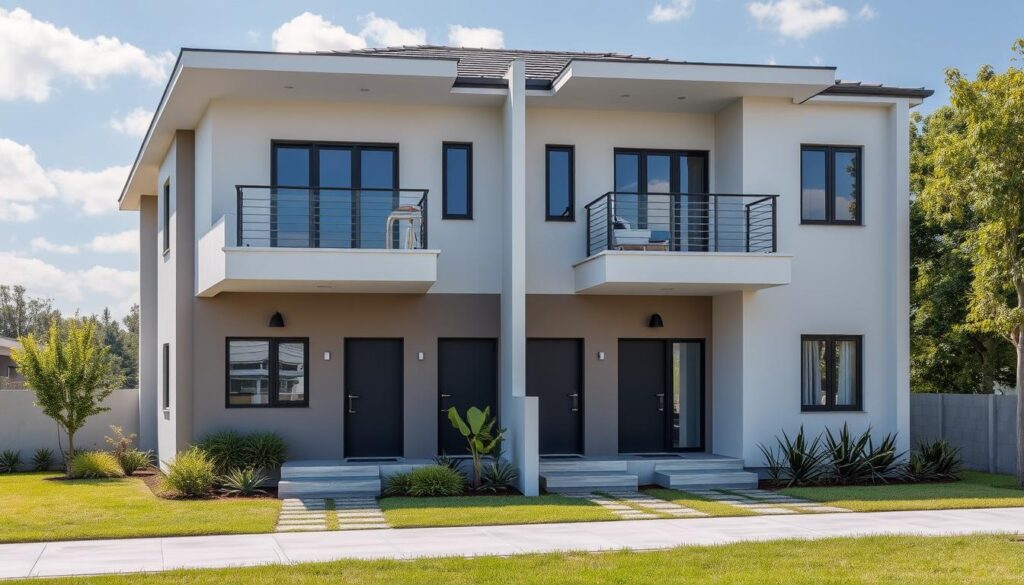
Rental Income Opportunities
Investors can use duplex properties in different ways:
- Live in one unit and rent out the other
- Rent both units for more income
- Offer a flexible home for families with different generations
Duplex investments are very appealing. About 18% of American families live in duplex or quadplex homes. This shows they are becoming more popular.
Property Appreciation Factors
| Appreciation Factor | Potential Impact |
|---|---|
| Location | High-growth areas can increase property value |
| Property Improvements | Upgrades can raise the market value |
| Rental Income Stability | Regular tenants make the property more attractive |
Cost-Benefit Analysis
Investing in a duplex can change your finances for the better. For example, a $1,500 monthly mortgage can be covered by renting one unit for $1,000. This leaves you with just $500 to pay.
“Duplex properties represent a smart investment strategy for those seeking to build wealth through real estate.” – Real Estate Investment Experts
Before investing, think about duplex costs, local rental markets, and long-term trends. This will help you make the most of your duplex investment.
Living in a Duplex: Practical Considerations
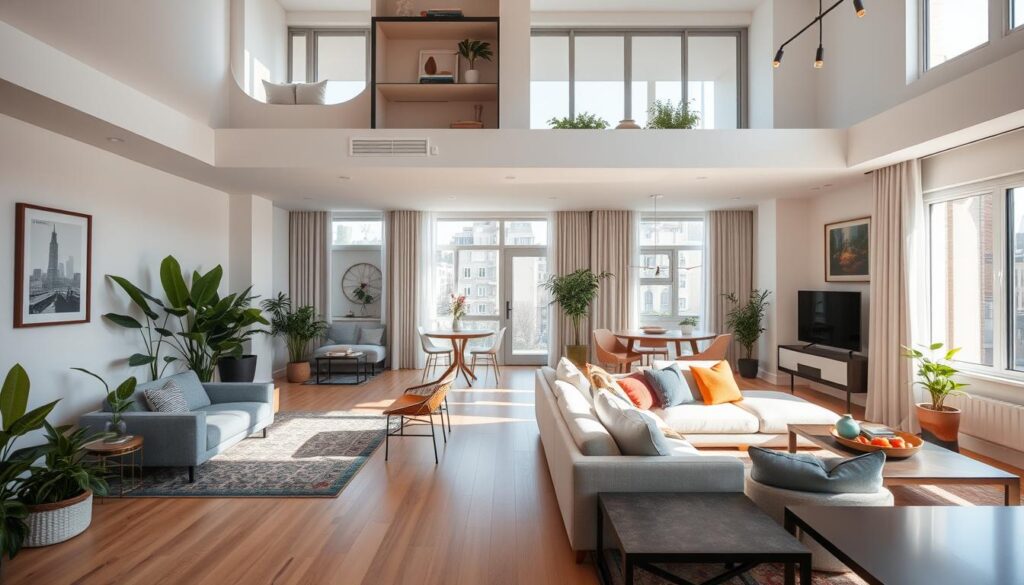
Duplex apartments offer both benefits and challenges. They provide a unique living experience. You get privacy and are close to your neighbors.
Key things to think about when living in a duplex include:
- Enhanced privacy through separate entrances
- Potential for multi-generational living arrangements
- Flexibility in personal and rental space utilization
- Shared maintenance responsibilities
Noise management becomes critical in duplex properties. It’s important to think about sound insulation and talking with neighbors to keep living comfortable.
“A duplex offers the perfect balance between community living and personal space” – Real Estate Insights
Duplex living can also save money. Homeowners can rent out one unit and live in the other. This way, they can make money from their home.
| Duplex Living Aspect | Potential Benefits |
|---|---|
| Rental Income | Can cover up to 50-75% of mortgage payments |
| Space Utilization | Flexible living and income-generating options |
| Property Management | Easier maintenance with proximity to rental unit |
To live well in a duplex, you need a plan and good communication. Set clear rules, know who does what, and aim for a peaceful home.
Financing Options for Duplex Purchase
Buying a duplex needs careful financial planning. You must know about special mortgage options. Buyers looking at duplexes for sale need to explore different financing strategies to succeed.
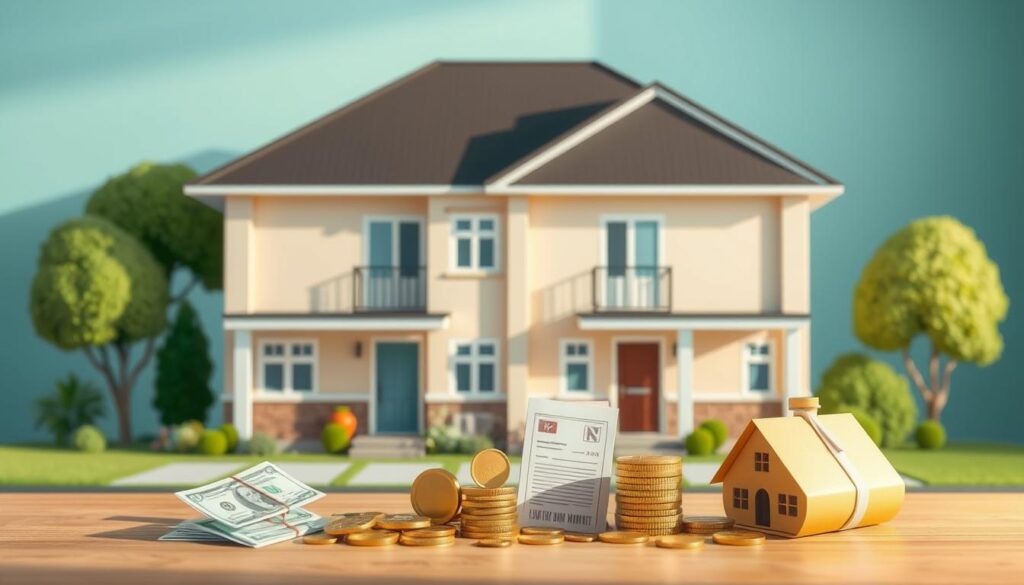
Duplex mortgages are different from regular home loans. Investors and homeowners have many ways to get funding for their duplex.
Mortgage Types for Duplex Properties
- Conventional Mortgages: Require credit scores above 700
- FHA Loans: More flexible for first-time buyers
- VA Loans: Special financing for military personnel
- Home Possible Loans: Flexible down payment options
Down Payment Requirements
Duplex costs vary, but down payments are similar for most loans:
| Loan Type | Minimum Down Payment | Additional Requirements |
|---|---|---|
| FHA Loans | 3.5% | Occupy one unit |
| Conventional Loans | 5% | Strong credit profile |
| VA Loans | 0% | Military service qualification |
| Home Possible Loans | 5% | 3% from personal funds |
Qualifying for Duplex Financing
Lenders look at several things when deciding on duplex financing:
- Credit score
- Debt-to-income ratio
- Potential rental income
- Personal financial stability
“Investing in a duplex can be a strategic financial decision for those understanding the nuanced mortgage landscape.”
Pro tip: Fannie Mae allows borrowers to use 75% of projected market rent when calculating property cash flow, potentially improving loan qualification chances.
Maintenance and Management Responsibilities
Owning a duplex house means you have to plan and manage two living spaces. You’ll need to handle the upkeep and rental income of both units. It’s a big job that requires careful attention.
Here are some key maintenance tasks for duplex owners:
- Regular structural inspections for both units
- Maintaining shared systems like HVAC and plumbing
- Managing tenant relationships
- Addressing repair needs promptly
The cost of owning a duplex can change based on its condition and upkeep needs. You should set aside money for:
| Maintenance Category | Estimated Annual Cost |
|---|---|
| Routine Repairs | $1,500 – $3,000 |
| Major System Replacements | $4,000 – $8,000 |
| Property Management (Optional) | 8-12% of rental income |
Professional property management can reduce personal stress but comes with additional duplex costs. You can manage your duplex in two ways:
- Self-management: Directly handling tenant interactions and maintenance
- Professional management: Hiring a property management company
“Successful duplex ownership requires proactive maintenance and clear communication with tenants.”
It’s important to know the local laws for landlords and tenants. Using digital tools like online rent collection and property management software can help. They make managing your duplex easier and less stressful.
The Difference Between Duplexes and Twin Homes
Real estate offers many housing options. Duplex houses and twin homes are two types that might look similar but are different. They vary in structure and who owns them.
Knowing the details about duplexes and single family homes helps buyers make smart choices. This knowledge is key for real estate investments.
Structural Variations
Duplexes have two living units in one building. They often share:
- A common foundation
- One roof
- Potential shared exterior walls
Twin homes look similar but are different in important ways:
- Built on separate lots
- Individual property boundaries
- More distinct structural independence
Ownership Distinctions
| Feature | Duplex | Twin Home |
|---|---|---|
| Property Ownership | Single owner for entire property | Separate owners for each unit |
| Lot Configuration | Single lot | Separate lots |
| Maintenance Responsibility | Centralized | Individual |
About 50% of duplexes have vertical layouts, unlike traditional twin homes. Investors and buyers should think about these differences when looking at duplex houses.
“Understanding the subtle differences between property types can unlock unique real estate opportunities.”
Property Value and Market Trends for Duplexes
Duplexes are becoming more popular in real estate. Houston added over 75,000 jobs last year, boosting rental demand. Duplexes can earn 20-30% more than single-family homes, making them a strong choice for investors.
When looking for duplexes for sale, it’s important to understand the market and finances. Houston’s price-to-rent ratio is ideal, between 10-11. Financing options include conventional loans needing 25% down and a 680 credit score. FHA and VA loans offer easier entry for buyers.
Effective property management is key to high returns on duplex investments. Budget for maintenance, which is 3-5% of rent, and expect 3-5% vacancy costs. Small upgrades, like washer/dryer connections, can increase rent and attract better tenants.
The duplex market is strong, with property values rising steadily. These properties offer two rental units, shared maintenance, and multiple income streams. They are a smart long-term investment in growing cities.